We've been busier in the past two years than at any comparable point in our history. That's not a brag — it's context. Contractors across DuPage and Will County are running at capacity. Wait times for quality general contractors have stretched from a few weeks to three to six months in some cases. If you've tried to get bids recently and found contractors slow to respond or quick to decline smaller projects, this is why.
Here's what's actually driving the renovation boom in the western suburbs — and what it means for homeowners planning projects in Naperville, Geneva, Wheaton, Lisle, Downers Grove, and the surrounding communities.
The Rate Lock-In Effect: Why Nobody's Moving
The biggest single driver is something economists call the "golden handcuff" or lock-in effect. Between 2020 and 2022, a huge percentage of homeowners in the western suburbs bought or refinanced at historically low mortgage rates — often in the 2.75–3.5% range. With 30-year fixed rates now sitting above 6.5%, moving to a larger or better-suited home means more than doubling their monthly interest cost on a similar loan amount.
The math is brutal. A homeowner with a $400,000 mortgage at 3% pays about $1,686/month in principal and interest. That same balance at 6.75% runs $2,594/month — over $900 more every month, $10,800 more per year, just for the same house.
So people aren't moving. Instead, they're investing in the homes they have. The extra bedroom they thought they'd get by upsizing is becoming a room addition. The outdated kitchen that would have been "the next owner's problem" is getting a full renovation. The unfinished basement they've been ignoring for ten years is finally getting turned into usable space.
DuPage County saw record low home inventory throughout 2023 and 2024. In Naperville, Geneva, and Wheaton, months of supply dropped below two months at various points — a severely supply-constrained market. That locked-in homeowner base isn't going anywhere, and they're spending renovation dollars instead.
Post-Pandemic Home Expectations Have Permanently Shifted
Remote and hybrid work changed what people need from their homes. The home office that was a nice-to-have became a necessity. Homes that were purchased for commuter proximity now need to function as workplaces, schools, and full-time residences in ways they were never designed for.
In practice, this has translated into consistent demand for:
- Dedicated home offices — properly sound-insulated, with real lighting, built-in storage, and electrical that can handle a professional setup
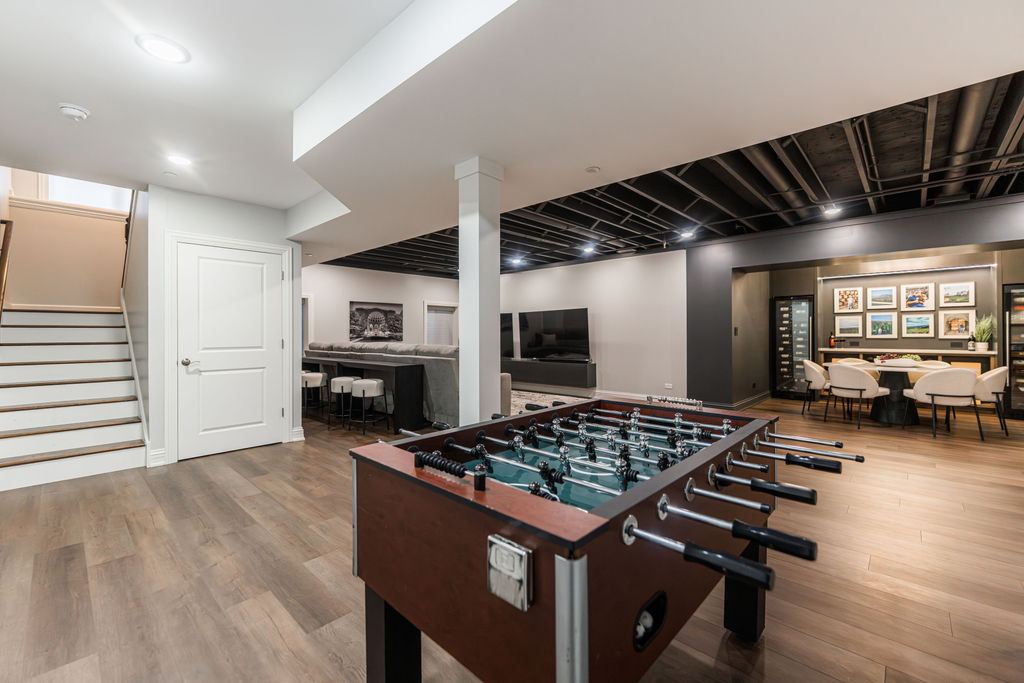
- Basement finishing — creating a separate space for work, a home gym, a kids' zone, or a guest suite that doesn't cannibalize the main living floors
- Kitchen expansions — families eating at home far more than they did pre-2020 have discovered that kitchens designed for the weekend dinner party don't work well for daily heavy use
- Outdoor living spaces — covered patios, outdoor kitchens, hardscaping — as people invested in their outdoor space during periods when indoor gathering was restricted
These aren't trends that reverse easily. A homeowner who built a proper home office in 2021 doesn't tear it out when their company goes back to in-office three days a week. These renovations represent permanent upgrades that also reflect in home valuations.
Western Suburbs Demographics: The Renovation Sweet Spot
DuPage and Will County have demographic profiles that align strongly with renovation activity. The area has high median household incomes — Naperville consistently ranks among the highest in Illinois — strong home values, and a large inventory of homes in the 20–40 year age range that are candidates for meaningful updates.
A home built in the early 2000s in a Naperville subdivision is hitting the age where the original kitchen and bathrooms feel dated, the systems are reaching end-of-life, and the layout doesn't match how families actually live today. These homes are valuable enough to justify major investment — a $60,000 kitchen renovation makes sense in a home worth $650,000 in a way it doesn't in a $180,000 home — and their owners often have the income and equity to fund it.
We're seeing a lot of second-major-renovation projects: homeowners who updated something 15 years ago and are now ready to do it right with more experience, better taste, and in some cases, kids out of the house and more flexibility to disrupt the space during construction.
What Projects Are Being Prioritized
Kitchen renovations remain the single largest category by dollar volume. In the western suburbs, a full kitchen renovation — new cabinets, countertops, appliances, flooring, lighting, and electrical — typically runs $50,000–$130,000 depending on finishes and scope. Higher-end projects with custom cabinetry and professional appliances exceed that range.
Basement finishing has grown significantly. An unfinished basement in a DuPage County home represents typically 800–1,400 square feet of unusable space in a market where above-grade square footage is expensive. Finishing a basement adds livable space at a fraction of the cost of an addition. For families needing a home office, a playroom, a secondary living area, or a guest suite, it's often the highest-ROI project available.
Room additions — particularly primary suite expansions, sunrooms, and accessory dwelling units — are up. The ADU category is newer but growing as multigenerational living becomes more common and as homeowners look to create rental income or future-proof their properties for aging parents.
Bathroom renovations, particularly primary bathrooms, round out the major categories. The gap between what buyers expect in a primary bath today — large format tile, frameless glass, heated floors, double vanities — and what was built in the 1990s and early 2000s is significant, and homeowners upgrading for their own enjoyment are increasingly willing to invest to close it.
What This Means If You're Planning a Project
Demand exceeding supply has practical consequences for homeowners planning renovations:
Lead times are longer. Quality contractors in the western suburbs are typically booked 2–5 months out for project start dates. If you're hoping to have a kitchen done before the holidays or a basement finished before summer, the conversation needs to start now — not when you're ready to break ground.
Material pricing has stabilized but not reversed. After significant inflation in lumber, cabinets, and fixtures in 2021–2022, material prices have stabilized. But they haven't returned to pre-pandemic levels. Budget accordingly.
The contractor shortage is real. The skilled trades have faced a persistent workforce shortage for over a decade, and the pandemic accelerated the retirement of older tradespeople while disrupting apprenticeship pipelines. There are genuinely fewer experienced carpenters, tile setters, and finish tradespeople in the market than the work available requires. This isn't price-gouging — it's supply and demand for skilled labor.
Vetting matters more now. When contractors are busy, the temptation is to take whoever's available. Resist it. A contractor who has time to start your project next week when everyone else is booked for four months is probably available for a reason. The questions worth asking before hiring a contractor apply even more in a seller's market for contractor services.
SilverBullet's Position in This Market
We've been deliberate about not growing faster than our ability to maintain quality. We run with an in-house crew that we've built over time — people we know, whose work we know, who share the same standards we hold ourselves to. We take a limited number of projects at any given time specifically to avoid the timeline chaos and quality degradation that comes from overextension.
That means we're not always the fastest to start. But it means the project you get is the project we described — on scope, on budget within the constraints of what's in our control, with a crew that shows up consistently and work that holds up.
If you're planning a renovation in Naperville, Geneva, Lisle, Wheaton, Downers Grove, or the surrounding communities and want to have a real conversation about scope and timeline, the right time to reach out is before you're in a hurry.
Frequently Asked Questions
How far in advance should I contact a contractor for a major renovation in the western suburbs?
For projects over $40,000 — kitchen renovations, basement finishing, room additions — plan to have your first contractor conversation 4–6 months before you want work to start. Earlier is better. The design and permit process alone often takes 6–10 weeks before a shovel goes in the ground.
Has construction inflation affected renovation costs in Illinois?
Yes, meaningfully. Lumber and material prices spiked significantly in 2021–2022 and have partially but not fully retreated. Labor costs have increased due to persistent skilled-trade shortages. Budget for renovation costs roughly 20–30% higher than equivalent projects in 2019. A contractor willing to promise pre-pandemic pricing is almost certainly cutting corners somewhere.
Is it a good investment to renovate in the current market?
For most homeowners who plan to stay in their home 5+ years, the answer is yes for projects that improve livability in rooms that get heavy daily use — kitchens, primary bathrooms, basements. The ROI calculus is more complicated for purely aesthetic updates or projects that overshoot the neighborhood. The "locked-in" dynamic means your neighbor's home value is also staying high, which supports renovation investment.
Which western suburbs have the most renovation activity right now?
Naperville, Geneva, St. Charles, Wheaton, and Downers Grove are consistently high-activity markets. These communities combine the home values that justify significant renovation investment, the demographic profile that drives demand (established families with equity), and the housing stock age that creates renovation opportunities.